
Immediate Protection During Severe Weather Events
Emergency Tarping Services in Youngsville for storm damage, fallen trees, and roof failures that expose interiors to rain
Severe weather events throughout the region—including hurricanes, tropical storms, and damaging thunderstorms—can tear sections of roofing away or drive debris through shingles, leaving your property exposed to rain and wind. Southern Roofing & Repairs provides emergency tarping that creates a temporary waterproof barrier while permanent repairs are planned and scheduled. You'll need tarping if a tree has punctured your roof, if wind has peeled back large sections of shingles, or if hail has shattered skylights and created multiple penetration points that can't be repaired immediately.
Emergency tarping involves securing heavy-duty reinforced polyethylene over damaged areas using fasteners that penetrate into solid decking and lumber anchors along roof edges. The process stops active water intrusion, prevents additional damage to insulation and interior finishes, and protects belongings until weather conditions allow for permanent repair work.
Call for immediate emergency assistance if your roof has been compromised and rain is forecast.
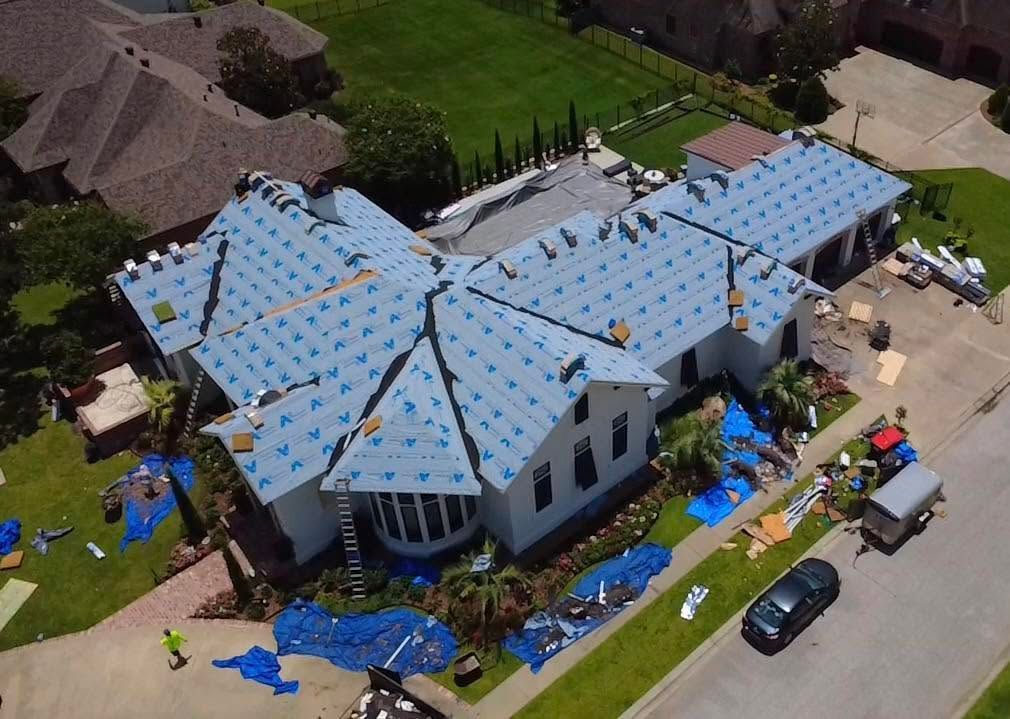
What Emergency Tarping Actually Accomplishes
Tarping creates a sealed covering that sheds water away from damaged areas, using overlapping seams and weighted edges to resist wind uplift during ongoing storms. Installers anchor tarps to structural members rather than relying on shingle nails, which prevents the tarp itself from tearing free and causing additional damage. The installation accounts for roof pitch and drainage patterns so water doesn't pool on the tarp surface and add weight stress to already compromised decking.
After tarping, you'll notice that active dripping stops, interior humidity levels drop as ventilation normalizes, and ceiling stains stop spreading. The tarp remains in place until permanent roofing materials arrive and weather permits safe installation, which may be several days or weeks depending on the scale of storm damage across the area and material availability. Tarping also preserves evidence of damage for insurance adjusters who need to document the loss before repairs proceed.
Tarping provides temporary protection but is not designed to remain in place for extended periods—UV exposure degrades polyethylene within sixty to ninety days, and fastener holes create potential leak points once the tarp is removed. Coordination with insurance adjusters and material suppliers determines how quickly permanent repairs can proceed after tarping is complete.
Answers to Frequent Service Questions
Property owners facing sudden roof damage want to know how quickly help can arrive, what the tarping process involves, and how long temporary protection will last.
How quickly can emergency tarping be deployed after a storm?
Response time depends on the scale of the weather event and how many properties in Youngsville and surrounding areas are affected simultaneously, but most emergency calls receive same-day or next-day service once conditions are safe for roof access.
What makes a tarp installation secure enough to withstand additional storms?
Installers use fasteners driven into rafters or solid decking every twelve to eighteen inches along tarp edges, supplemented by sandbags or lumber battens that distribute wind load across the tarp surface rather than concentrating stress at individual anchor points.
Why is tarping necessary if rain has already entered the building?
Stopping ongoing water intrusion prevents secondary damage to framing, electrical systems, and interior finishes that continues with each subsequent rain event, and reduces the total repair cost by limiting the affected area.
What documentation should I collect for insurance purposes?
Photograph the damage before tarping if safe to do so, document the date and time the damage occurred, and retain all invoices for emergency services, as many policies cover temporary protection costs separately from permanent repair expenses.
When should tarping be replaced with permanent repairs?
Tarps begin to degrade noticeably after six to eight weeks of sun exposure, and any delay beyond ninety days risks tarp failure during the next storm, requiring a second emergency response and additional interior repairs.
Southern Roofing & Repairs coordinates with insurance representatives to ensure documentation meets claim requirements and that tarping costs are properly recorded. Reach out immediately when storm damage occurs to minimize water intrusion and protect your property while permanent solutions are arranged.