
Repairs That Stop Further Structural Damage
Roof Repairs in Youngsville for leaks, missing shingles, and flashing failures caused by storms and aging materials
Missing shingles after a storm or water stains spreading across your ceiling indicate roof damage that worsens with each rain event. Southern Roofing & Repairs addresses leaks, flashing separation, and shingle blow-off before water penetrates decking and insulation. Properties in this region face frequent wind-driven rain and hail that dislodge granules and crack sealant strips, creating entry points for moisture that aren't always visible from the ground.
Roof repairs begin with identifying the source of visible problems and tracing water infiltration back to its origin, which often sits several feet upslope from where stains appear inside. Flashing around chimneys and vent pipes fails when sealant hardens and cracks under UV exposure, while valleys collect debris that traps moisture against underlayment.
Request a roof repair assessment to locate damage before it spreads into structural components.
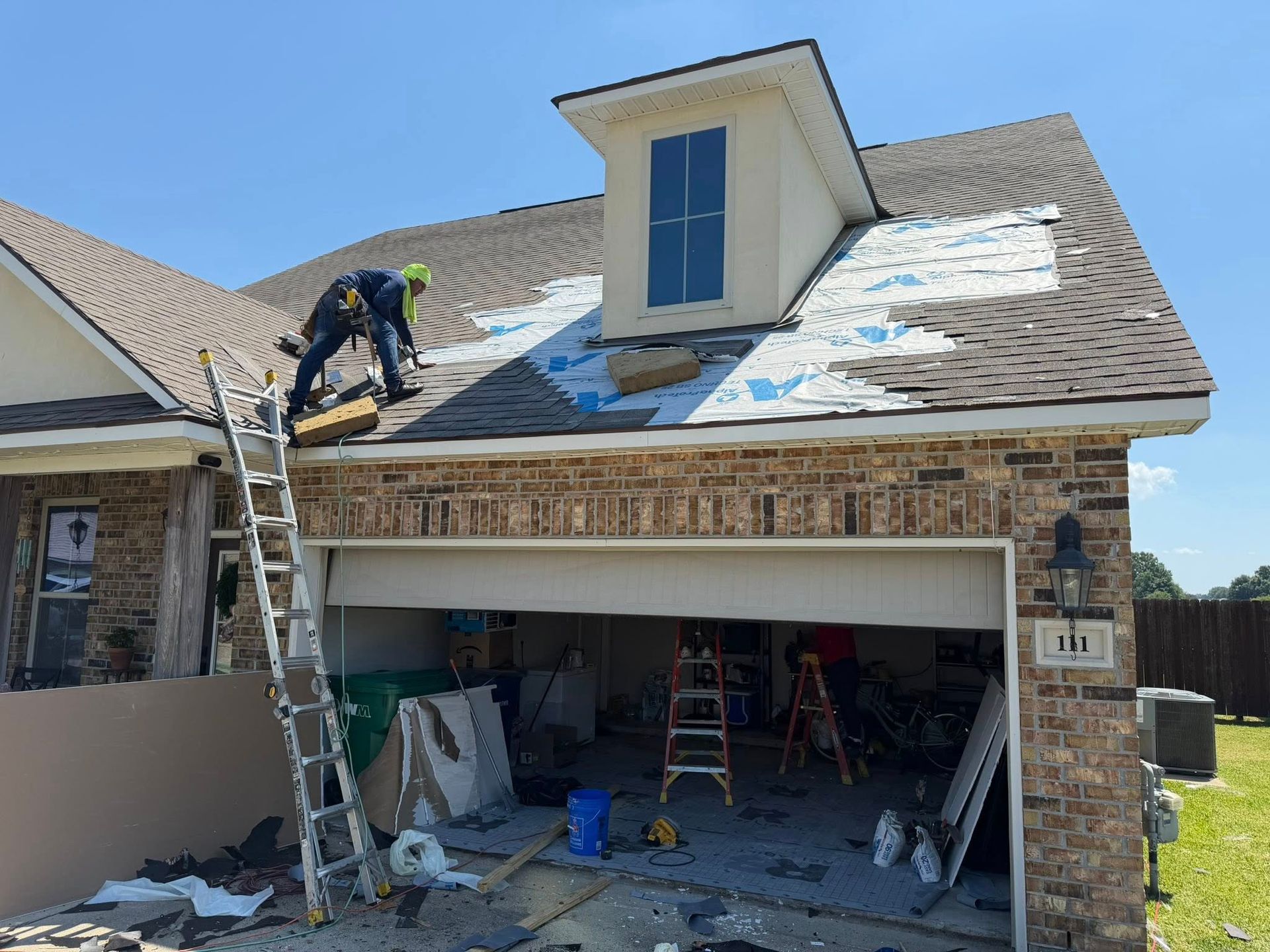
How Roof Repairs Address Ongoing Leaks
The repair process involves removing damaged shingles in the affected area, inspecting underlayment and decking for saturation, and replacing compromised layers before installing new shingles that match your existing roof profile. Flashing repairs require removing old sealant, repositioning metal components to ensure proper overlap, and applying new elastomeric compounds rated for temperature swings common in Lafayette Parish. Inspectors also check for less obvious issues like lifted ridge caps and nail pops that haven't caused leaks yet but will during the next heavy rain.
You'll notice that ceiling stains stop expanding, attic insulation dries out, and air conditioning costs stabilize once conditioned air is no longer escaping through gaps where water entered. Properly repaired flashing channels water away from seams instead of allowing it to wick under shingle edges, and replaced shingles restore wind resistance so additional sections don't peel away during the next storm.
Repairs restore immediate weather protection but don't extend the overall lifespan of a roof already past its expected service life. If your roof is more than twenty years old or requires frequent repairs in different areas, replacement may be more cost-effective than addressing isolated problems as they emerge season by season.
Common Questions About This Service
Homeowners dealing with roof leaks want to know what causes the damage, how quickly repairs should happen, and whether the fix will hold through future weather events.
How quickly do roof leaks cause structural deterioration?
Water that reaches decking begins softening plywood within weeks, and once insulation becomes saturated it loses R-value and promotes mold growth in attic spaces, turning a shingle repair into a decking replacement.
What makes flashing fail on roofs in this area?
Thermal expansion from daytime heat followed by overnight cooling causes sealant joints to crack, while wind-driven rain common during spring and summer storms forces water under flashing edges that weren't originally secured with mechanical fasteners.
Why do some leaks only appear during heavy rain?
Light rain may not generate enough water volume to overcome the surface tension holding moisture on top of compromised flashing, but once rainfall intensity increases, water finds every gap and crack that's developed since the roof was installed.
What should I look for when inspecting my roof after a storm?
Missing or lifted shingles, granules collecting in gutters, and exposed nail heads indicate wind damage, while dents in metal flashing or cracked ridge caps suggest hail impact that may not cause immediate leaks but shortens remaining roof life.
When is patching no longer sufficient?
If repairs are needed in multiple roof sections within a single year, or if leaks reappear in previously repaired areas, the underlayment and decking have likely deteriorated beyond what surface fixes can address.
Southern Roofing & Repairs provides documentation of repairs with photos showing the extent of damage and work completed, which supports insurance claims when storm damage is involved. Contact the office to arrange an inspection that identifies both visible damage and potential failure points.