Roofs Built for Decades of Weather
Metal Roofing in Youngsville for properties exposed to high winds and heavy rainfall
Metal roofing systems resist wind uplift in ways that composition shingles cannot, with interlocking panels that remain secured during storms that would strip traditional materials. Southern Roofing & Repairs installs metal roofing across Youngsville and surrounding parishes where hurricane-force winds and seasonal downpours test every fastener and seam. When installed correctly, these systems channel water off the deck quickly, prevent wind-driven rain intrusion, and maintain structural integrity through weather events that damage other roof types.
Metal roofing consists of panels or shingles fabricated from steel, aluminum, or specialized alloys, each coated to resist corrosion in Louisiana's humid climate. The panels interlock along edges and attach through concealed fasteners or exposed screws with rubber washers, creating a continuous barrier that sheds water rapidly and withstands sustained winds. Because metal reflects radiant heat rather than absorbing it, attic temperatures drop significantly compared to asphalt systems, reducing cooling loads during summer months when temperatures climb above ninety degrees for weeks at a time.
Schedule a metal roofing consultation to review panel profiles and coating options suited to your building's exposure.
What Metal Roofing Actually Accomplishes
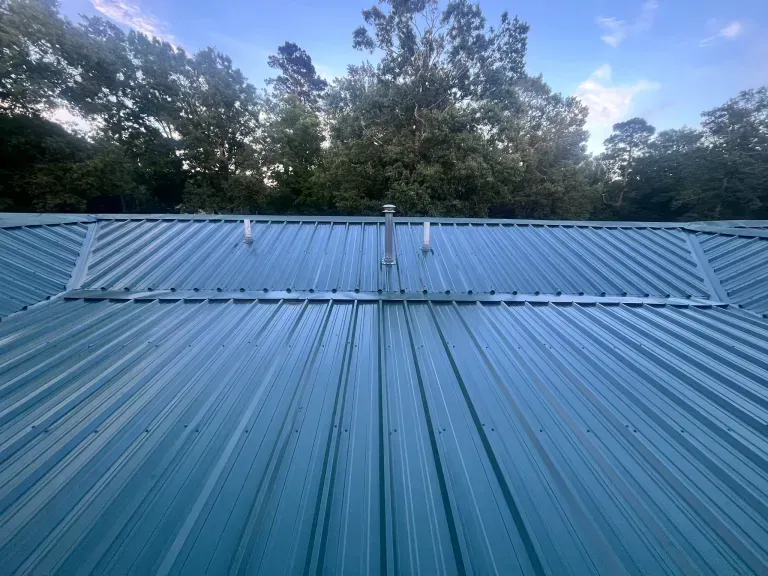
Metal roofing installations begin with deck inspection and any necessary sheathing repairs, followed by underlayment application that provides secondary water protection. Panels are measured, cut, and fastened according to manufacturer specifications that account for thermal expansion and contraction, with each seam aligned to direct water flow toward eaves and away from valleys. Ridge caps, flashing, and trim pieces seal transitions where panels meet walls, chimneys, or other roof planes.
Once the system is complete, you'll notice water running off the roof within seconds of rainfall starting, rather than pooling or soaking into granulated surfaces. Moss and algae growth stops entirely because metal provides no organic material to support biological activity. The roof remains visibly unchanged year after year, with coatings that resist fading and panel profiles that don't warp, crack, or curl under UV exposure.
Metal roofing systems require minimal maintenance beyond occasional debris removal and fastener inspections, but they do not perform identically across all profiles. Standing seam systems with concealed fasteners offer superior weather resistance compared to exposed-fastener panels, which depend on washer integrity to prevent leaks. The choice between profiles affects both longevity and cost, with standing seam installations typically providing service life exceeding fifty years when panels and coatings are matched to coastal or inland exposure conditions.
What Property Owners Usually Ask
Questions about metal roofing often focus on performance differences, installation requirements, and how these systems compare to traditional materials in Louisiana's climate.
What panel profiles does metal roofing include?
Standing seam panels feature raised ribs and concealed fasteners for maximum weather resistance, while corrugated and ribbed panels use exposed fasteners and cost less upfront. Metal shingles replicate the appearance of slate or tile but install on steeper pitches than panel systems.
How does metal roofing handle hail and debris impact?
Metal roofing dents rather than cracks under impact, maintaining weather integrity even when cosmetic damage occurs. Heavier gauge materials resist denting better than thinner panels, and aluminum dents more easily than steel under identical impact force.
When should metal roofing replace an existing asphalt system?
Metal roofing makes sense when the current roof nears the end of its service life, when energy costs justify the investment in reflective coatings, or when repeated storm damage indicates the need for a more durable system. In Youngsville and areas near the coast, wind resistance often drives the decision.
What preparation does metal roofing installation require?
Most installations proceed over existing sheathing after removing old shingles, though some standing seam systems install over solid substrates without tear-off when deck condition allows. Proper ventilation must be maintained to prevent condensation on the underside of metal panels.
How long does a metal roofing system perform before requiring replacement?
Standing seam systems with high-quality coatings typically perform for fifty years or longer, while exposed-fastener panels depend on fastener and washer condition and may require re-fastening or panel replacement after twenty-five to thirty-five years depending on exposure and maintenance.
Southern Roofing & Repairs evaluates deck condition, calculates panel quantities, and matches coating systems to your building's orientation and exposure. Request a detailed estimate that includes panel specifications and fastening methods specific to your roof geometry.